
Regenerative Cooling Optimization #1
December 28, 2025
This entry documents the regenerative cooling optimization process using RPA (Rocket Propulsion Analysis). The goal was to design coolant channels that keep the chamber and throat walls within acceptable temperature limits while maintaining reasonable pressure drop and manufacturability.
Initial Baseline: Case C0
The first attempt used a simple 1 mm × 1 mm channel geometry to establish a baseline.
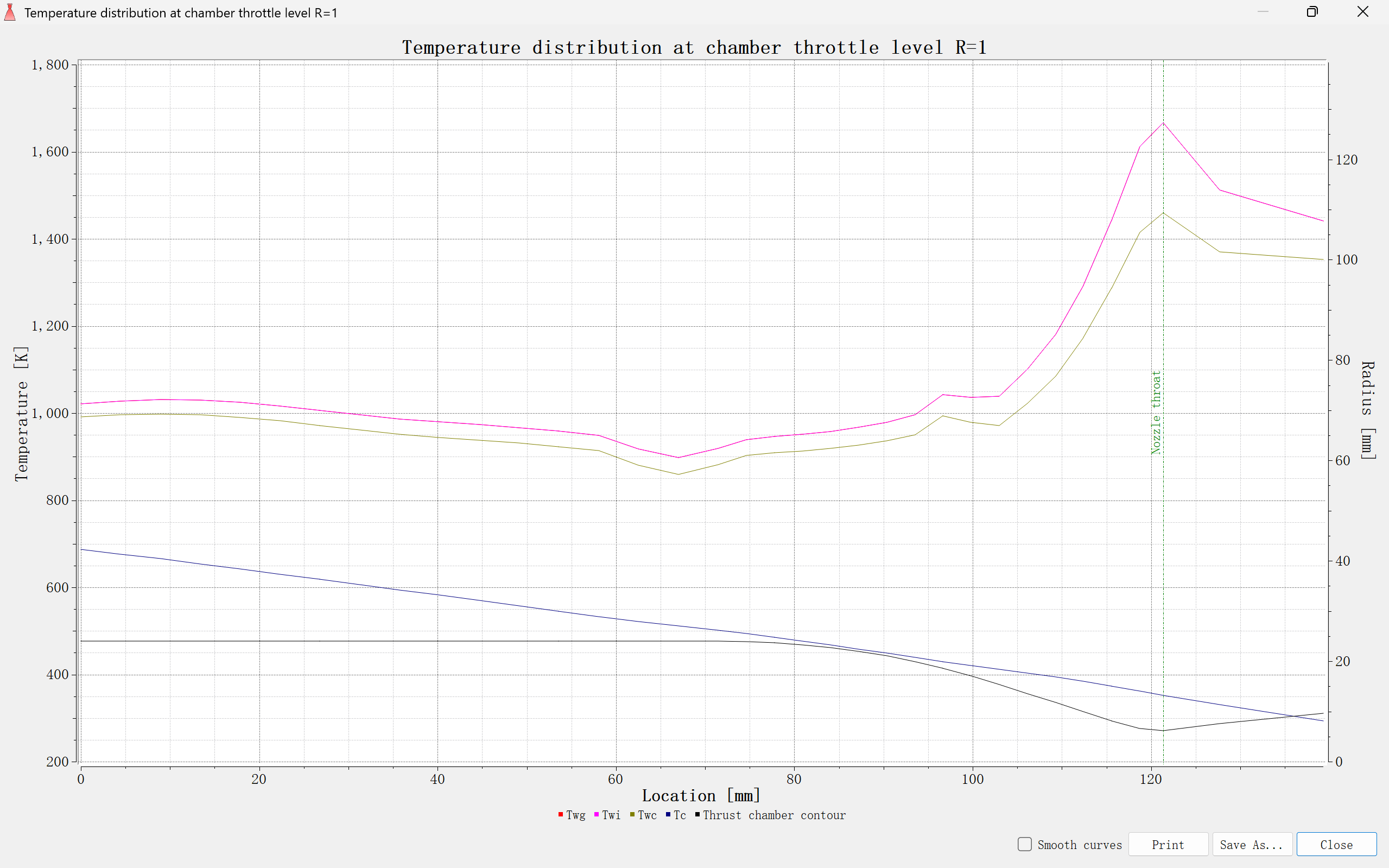
Maximum wall temperature approached 1600 K, and the coolant-side wall reached 1000 K. This is far too high for structural materials—neither aluminum alloys nor stainless steel can maintain strength at these temperatures.
Automatic Mode Attempt: Case C1
Next, we tried RPA’s “automatic” optimization mode, hoping it would find a reasonable geometry.
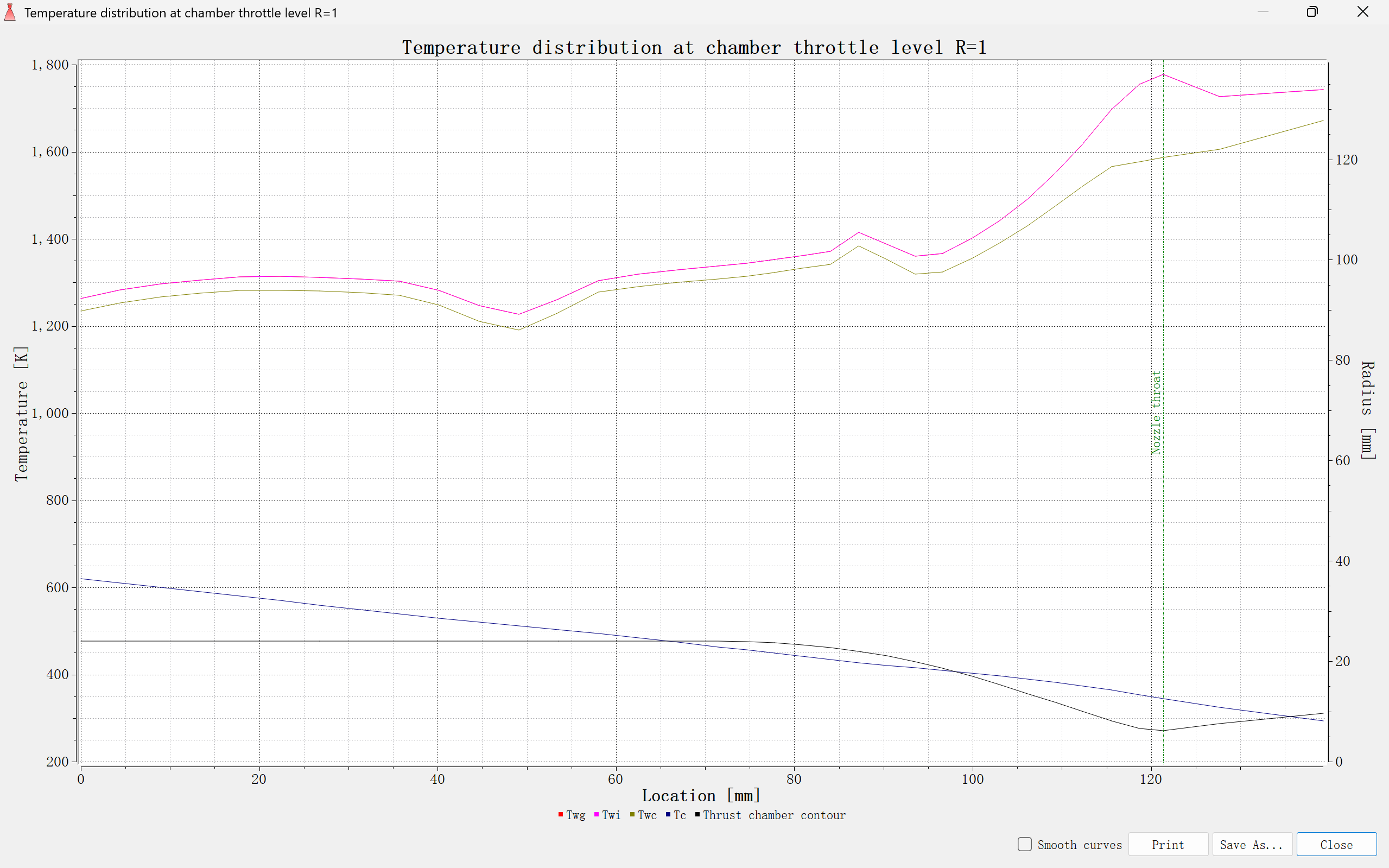
Unfortunately, the entire engine heated up to over 1200 K. The automatic solver failed to converge to a practical design, likely due to the solver use the maximum channel size to 1.5mm in hight.
Refined Geometries: Cases C2, C3
After manual iteration, Cases C2 and C3 show progressively improved thermal performance.
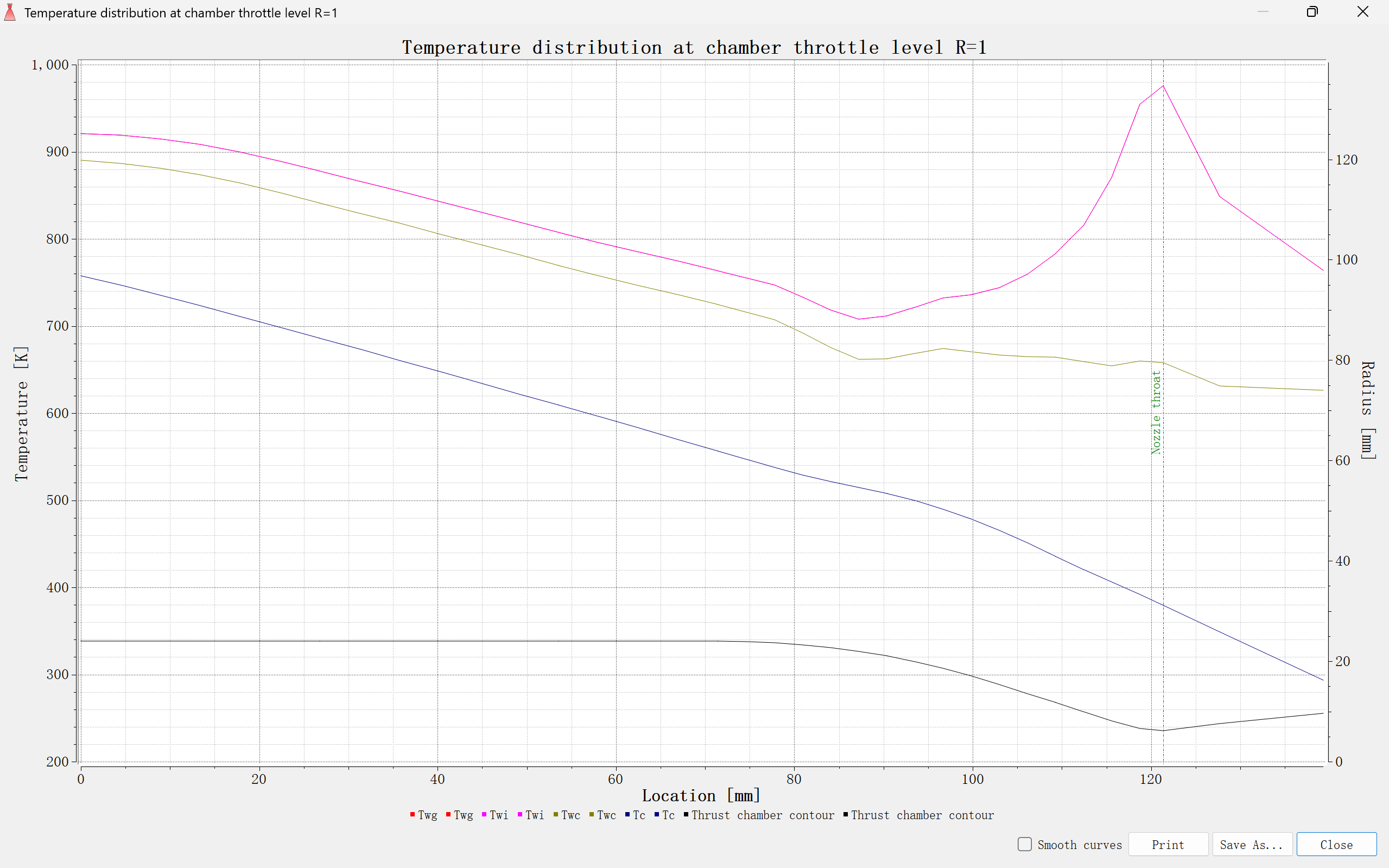
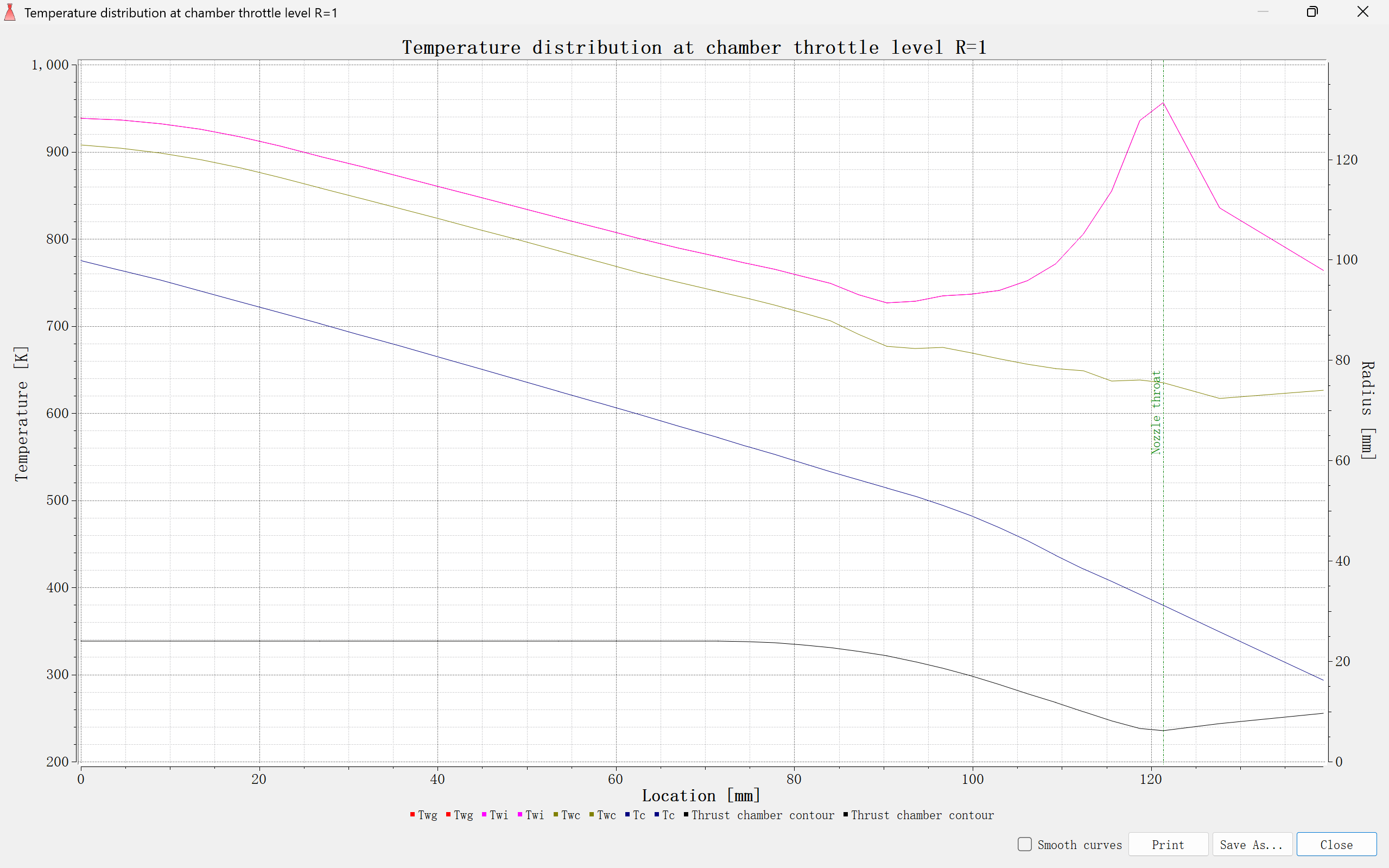
Throat maximum temperature reduced to approximately 950 K. However, this is still above the safe operating range for aluminum alloys and standard stainless steels, where material strength begins to degrade significantly. Additionally, it can be noted that the coolant temperature does not appear to have improved, at which point the ethanol completely vaporizes.
To achieve the thermal performance of Case C3, the narrowest cooling channel cross-section becomes 0.01 mm. This is effectively impossible to manufacture with any practical 3D metal printing.
Alternative Approach: Diluted Ethanol (80%)
Since pure ethanol cooling proved insufficient, we explored using 80% ethanol (20% water by mass) as both propellant and coolant. The hypothesis was that the higher specific heat capacity and latent heat of vaporization from water content might improve cooling performance.
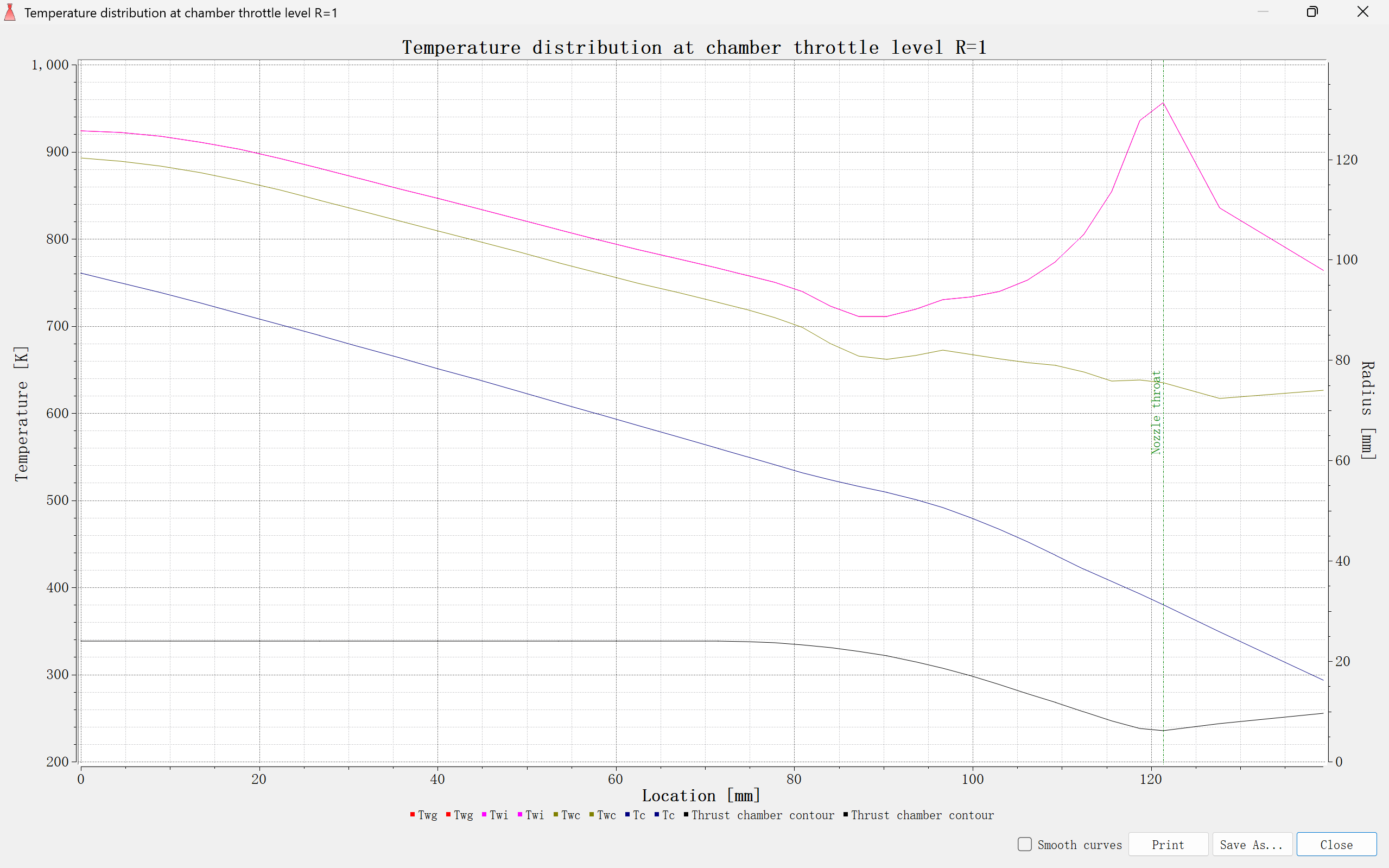
Chamber wall temperature decreased slightly compared to pure ethanol, but throat temperature remained nearly unchanged, still around 950 K. Diluting ethanol reduces specific impulse due to lower combustion temperature and molecular weight increase.
Further investigation is needed, and the current setup can’t even withstand a few seconds of ignition.